Greenville's Grid Can Probably Absorb the Data Center Boom, but Only If South Carolina's Unwritten Large-Load Tariff Has Teeth
The Upstate owns the nuclear and pumped storage a demand spike needs, but who funds building ahead of the data centers turns on a tariff South Carolina has not written yet.
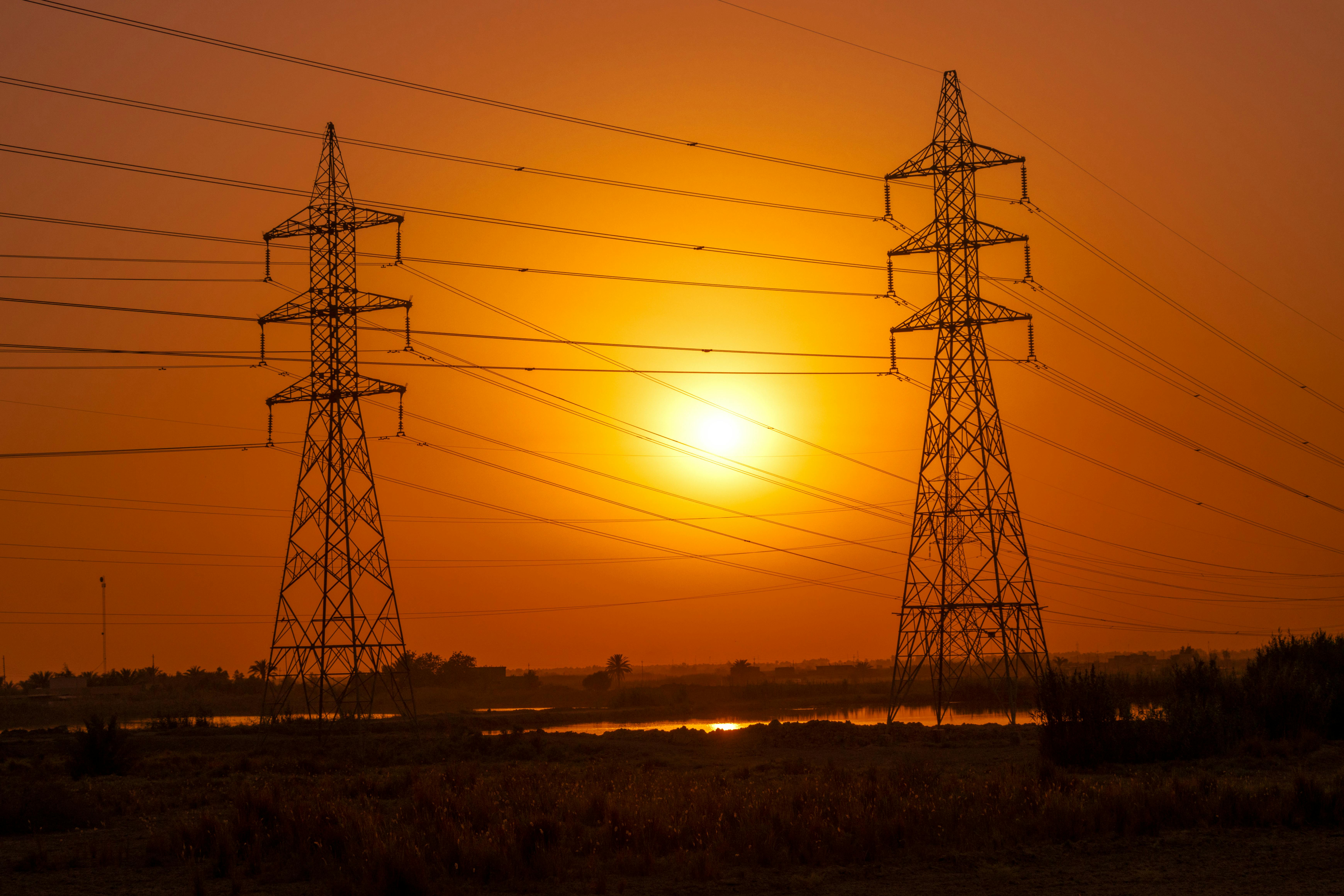
The Upstate already owns the two machines a power crunch needs most: Oconee's 2,538 MW of nuclear baseload and Bad Creek's 1,680 MW of pumped storage, both in Oconee County, per Duke. Oconee runs three pressurized-water reactors that came online in 1973 and 1974, and the NRC renewed their licenses in the spring of 2025 to carry the plant to an 80-year life ending in 2053 and 2054. Bad Creek got a 320 MW uprate finished in April 2024. These are real, paid-for assets near Greenville, and that is why the coming fight is not about whether the power exists.
The fight is about a clock. The one law of a power grid is that you cannot store electricity in any meaningful quantity as electricity, so generation has to match consumption every instant. The system holds its frequency at 60 hertz to prove the match is working. When demand outruns supply, that frequency sags, and operators have to shed load or fire up more generation. To keep the match, utilities lean on two kinds of plant. Baseload plants like nuclear and combined-cycle gas run flat around the clock at a low cost per unit but ramp slowly. Peaking plants, the simple-cycle combustion turbines, cost more to run but start fast. Duke's 2025 Carolinas Resource Plan proposes about 9.7 GW of new gas by 2033, five combined-cycle units and seven combustion turbines, because it needs both the flat floor and the fast top.
Where a plant sits on that spectrum shows up in its capacity factor, the share of its theoretical maximum output it delivers over a year. Per EIA figures for 2024, nuclear runs near 92 percent, gas combined-cycle just under 60, wind about 34, and solar about 23. A data center that draws power 24 hours a day is a poor match for a resource that produces roughly a quarter of the time. That is why the demand story bends toward firm generation rather than panels alone. A new generator has to pass an interconnection study proving it will not destabilize the grid. Nationally the median time from request to operation for plants reaching service in 2023 was about five years, up from under two years two decades earlier, per Lawrence Berkeley National Laboratory. That five-year queue, more than land or water, is now what decides where a large employer can plug in.
Closing that timing gap costs money before any new revenue arrives.
The near-term bill is not where the pain shows. The December 2025 settlement in Duke's South Carolina rate case cut the ask from about 7.6 percent to roughly 0.6 percent, about 84 cents a month on 1,000 kWh. South Carolina residential rates near 14 to 16.5 cents per kWh still sit under the national average near 18 cents, per the EIA. I am presenting the settlement and rate figures as reported, and several are still worth verifying against the final order. The longer arc is the capital plan. Duke describes a five-year program of about 103 billion dollars across 2026 to 2030, which it calls the largest of any US regulated utility, with roughly 65 percent aimed at grid and generation. A regulated monopoly recovers prudent capital plus an authorized return, here 9.99 percent, from ratepayers over time. Large capital programs tend to lift rates over years even when any single rate case looks small.
There is a second stake that lands before the bill does. Because interconnection capacity is the scarce thing, a data center or a manufacturer now sites where transmission already exists. Who gets the next big employer is increasingly a question of who has spare grid. If you are weighing where growth is actually landing in the Upstate, and you are looking to buy or thinking about selling, tell me what you are working on and I will help.
Two costs will not be argued away. You cannot store much electricity, so firm supply must be built ahead of demand that can energize far faster. When a large new customer needs new generation and transmission, someone funds it before the revenue arrives. If the customer does not commit to pay its full share, the cost spreads to everyone. A North Carolina commissioner pressed on the core worry when he noted Duke's large-load queue was roughly 70 percent data centers against about 100 billion dollars of investment by 2035. Duke's own filings, as reported, show data centers around 30 percent of new customers but close to 80 percent of projected new demand. The plan projects energy needs growing about eight times the prior 15-year rate, which is Duke's forecast and rests on committed pipelines that can shrink.
The builder's steelman is honest too. Under-building means blackouts and turning away employers, and Duke's forecasts have repeatedly been revised up, so the cautious error has a real cost of its own. What is contingent is whether the harm to residential ratepayers lands, because that turns on tariff design still unwritten. A well-built large-load tariff can require multi-year contracts, minimum bills, and exit fees that hold hyperscale customers to their own costs. Sierra Club settlements require the South Carolina Public Service Commission to open a docket on large-load tariffs. In North Carolina the House passed a bill making data centers of 100 MW or more bear their full infrastructure cost. The physics gap is a permanent cost to manage. The cost shift onto residential bills is a live risk that good rules can still prevent.
South Carolina has already run the other experiment once. At V.C. Summer in Fairfield County, two planned reactors were abandoned in July 2017 after about 9 billion dollars. Under the Base Load Review Act, SCE&G customers paid roughly 18 percent of their bill toward reactors that never ran. That was SCE&G and Dominion territory, not Duke, so Greenville's Duke ratepayers did not pay that charge. Still, it is the reason the state will not accept "trust us, we need to build" on faith. The state's 2025 Energy Security Act is the legislative answer to load growth, and critics argue it tilts toward utilities and large loads over ordinary ratepayers, and its details are worth watching.
For a resident or a buyer, the thing to judge is not the eight-times headline and not any single rate case. The yardstick is public and simple. Watch whether the finished large-load tariff and any new build are matched to energized, contracted load rather than to announced pipelines. Watch whether that tariff forces hyperscale customers to fund their own generation and transmission. If it arrives with teeth, the Upstate's existing nuclear and storage make it one of the better-positioned places in the country to absorb this demand. If it is toothless, the same capital plan moves the cost toward the residential bill. One large landing plays out locally in the Spartanburg data center piece.
The real choice is between under-building and risking blackouts that turn employers away, or building ahead of a forecast that might not arrive and letting residential ratepayers carry that risk. Which error would you rather South Carolina make, and what would you need to see in the tariff to trust that the large loads, not your bill, are covering the difference?
Information only, not financial, legal, or investment advice. Figures are current as of 2026 and change over time.
Get the next one in your inbox.
I dig into the technology and capital reshaping South Carolina, one system at a time, and what it means for where we live, work, and invest. Subscribe and the next one lands in your inbox.
Prefer Substack? Subscribe there instead.