Who Is Buying Commercial Real Estate in Greenville, SC? What the County Deed Record Actually Shows (2026)
A data read on who is buying commercial property in Greenville County, from $924M across roughly 250 sales to the active corridors and what the deed record cannot tell you.
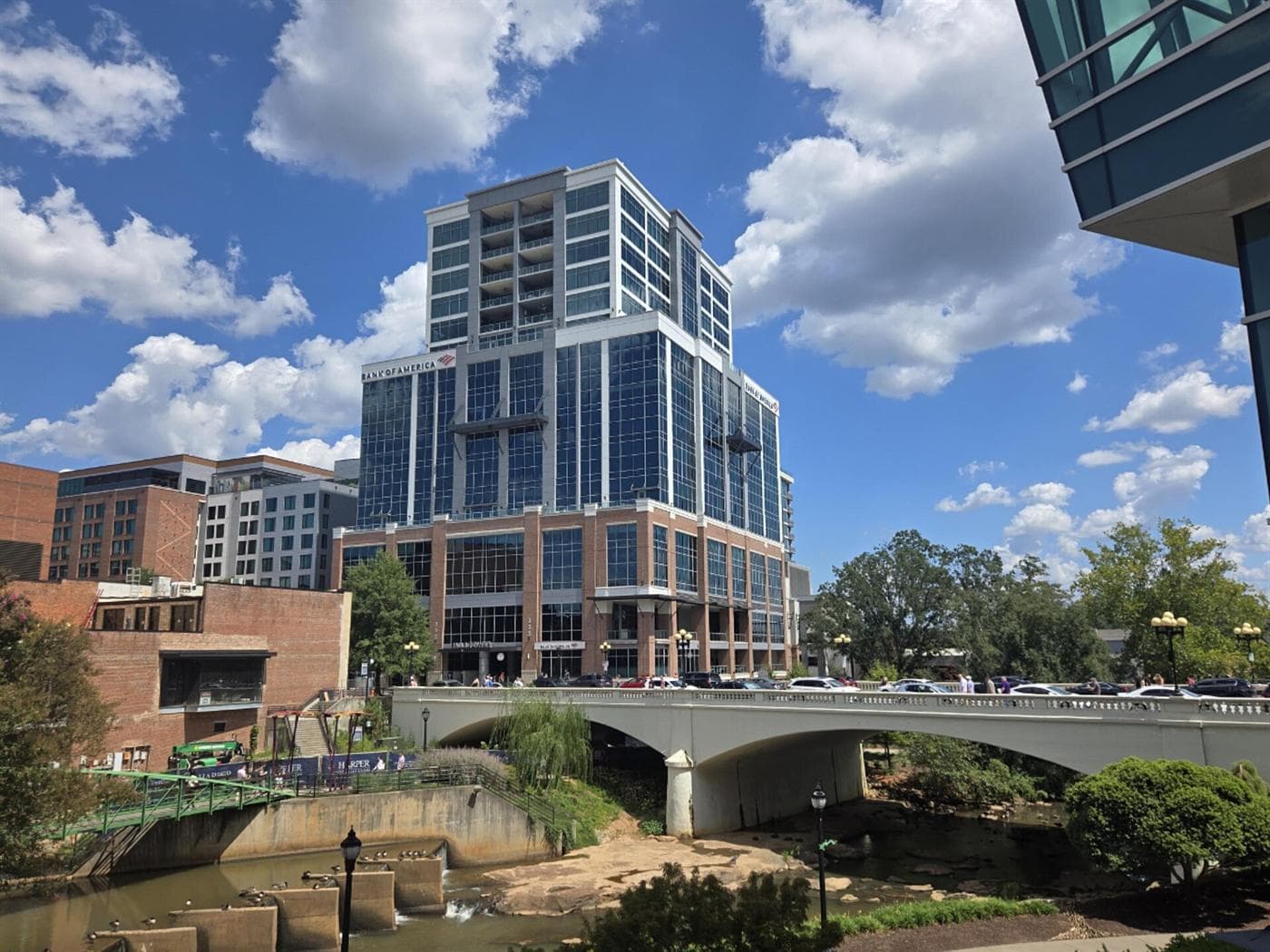
Buyers spent about $924 million on Greenville County commercial property priced at $1 million or more across roughly 250 recorded sales in the two years through early 2026, and the median deal ran about $2.2 million, per county deed records via the GIS commercial layer. That is the honest answer to who is buying commercial real estate in Greenville, SC. It is not a handful of skyline towers changing hands. It is a steady stream of mid-sized deals spread across healthcare systems, apartment developers, and single-asset LLCs.
County deeds record on a lag of about four months, so this is a rear-view read that runs through deals recorded in early 2026, not this week's closings. The pattern is still clear enough to be useful, and you can see the individual sales, with buyer name, price, date, and address, in the buyers-list tool.
Who is buying commercial real estate in Greenville, SC?
The biggest recorded buyers over the last two years are healthcare systems, multifamily developers, and out-of-area capital, sitting right alongside local single-asset LLCs, per county deed records. Novant Health is the clearest institutional name in the set. The county layer records its purchase on Carolina Point Parkway, and the Upstate Business Journal reported that the former TD Bank campus there traded for about $45 million in early 2026 in a sale-leaseback, part of the system's broader Upstate expansion.
Below Novant, the largest deals in the record are developers and investment entities. M8 Dev Greenville LLC recorded the single biggest sale in the set, about $43.55 million on West Laurens Street in October 2025. A pair of Connexion Communities deeds on Harrison Bridge Road in Simpsonville totaled about $50.7 million the same month. Proponent Inc recorded about $19.25 million on Whitlee Drive in December 2025. You can pull each of these up by name in the buyers-list tool.
One honest caution matters before you read an entity name as an identity. The county truncates buyer and seller names at 24 characters, so an entry like "CONNEXION COMMUNITIES SI" in the record is a floor, not a finished corporate name. Treat any entity in the data as the starting point for your own title search, not the last word on who really controls the asset.
Where the money is going in Greenville's corridors
Woodruff Road led every corridor with 11 recorded sales of $1 million or more, ahead of Augusta Road with 7 and a tie at 6 among Laurens Road and Harrison Bridge Road in Simpsonville, per county deed records. Wade Hampton Boulevard and White Horse Road followed with 5 each, then Pelham Road, South Main Street, Congaree Road, and North Main Street with 4 apiece.
That Woodruff Road concentration is not an accident. The corridor carries more than 40,000 vehicles a day, and the state is planning a $121 million SCDOT congestion-relief project that would add a 3.5-mile, five-lane bypass from Verdae Boulevard to Smith Hines Road. Construction is slated to begin in 2026 and finish in 2029. The city of Greenville has also moved to annex about 135 acres along Woodruff Road, including the 60-acre Merovan Business Center. Retail and flex investors are buying where the rooftops and the traffic already are, and where public money is about to reshape access.
Thinking of making a move?
Let me know if you’re thinking about selling, or if you’re looking to buy!
Get in touchHow big are the deals, really?
Four out of five commercial sales in Greenville County are small enough for a local investor to reach, not just an institution. Of the 250 recorded sales, 107 fell in the $1 million to $2 million range and 94 landed between $2 million and $5 million, per county deed records. Only 38 ran from $5 million to $10 million, just 8 sat between $10 million and $25 million, and only 3 topped $25 million.
That distribution is the part the headlines miss. The Novant and Connexion numbers make the news, but the working market here is a multi-tenant retail strip, a flex-industrial bay, or a small office building trading in single-digit millions. If you are running the numbers on one of those, the deal-analyzer tool will walk you through cap rate, cash flow, and cash-on-cash, and the companion guide on investing in Greenville rental property covers how the local math actually pencils.
The market underneath the deeds
Greenville-Spartanburg industrial vacancy fell to 5.3% in the second quarter of 2026, with about 2.4 million square feet of positive net absorption, per CBRE's Q2 2026 industrial figures. That is the strongest corner of the local commercial market, driven by manufacturing demand from anchors like BMW in Greer and the supplier base around it.
Pricing is harder to state cleanly because cap rates are estimated, not recorded on a deed. Local market summaries put Upstate industrial and flex cap rates roughly in the 5.5% to 7% range, retail on triple-net leases around 6% to 7.5%, and office higher and wider, from about 7% past 8% depending on tenant quality, per a 2026 Greenville market report. Treat those as approximate ranges, because a single building's rate depends on its lease, its tenant, and its condition.
What the public record can and cannot tell you
The deed record is reliable on the four things it captures, which are price, date, address, and the buyer and seller names as filed, and it is silent on almost everything else. It does not show the financing, the cap rate, the tenant, the rent roll, or why the buyer wanted the asset. Only a minority of these very recent sales have been assessor-validated yet, because that review runs on a multi-year cycle, which is normal and not a sign anything is wrong with the number.
So read this data for what it is good at. It tells you who filed a deed, for how much, and where, better than any portal will surface it. It cannot tell you whether a given deal was a bargain or a mistake. That judgment still takes a walk of the property and a look at the lease.
If you are buying or selling in Greenville
A commercial or investment decision in Greenville turns on the corridor, the price band, and the tenant, and the public record only gets you partway to any of them. If you are looking to buy, or you are thinking about selling, tell me what you are working on and I will help. You can also browse the rest of the Greenville real estate guides while you weigh it.
*Sources: Greenville County deed records via the county GIS commercial layer; CBRE Greenville-Spartanburg Industrial Figures, Q2 2026; Upstate Business Journal; SCDOT Woodruff Road Congestion Relief Project; Greenville Journal; CLS Greenville market report, 2026. Information only, not financial, legal, or investment advice. Figures are current as of 2026 and change over time.
Thinking of making a move?
Let me know if you’re thinking about selling, or if you’re looking to buy!
Get in touchGet the next one in your inbox.
I write honest guides to buying, selling, and living in Greenville, South Carolina, grounded in real local data. Subscribe and I will send the next one straight to your inbox.
Prefer Substack? Subscribe there instead.